
Seeing Is Believing
Hannah Crain
Consultant, Client Services
Before I ever step inside the building of one of my rescue mission clients, I’ve usually spent hours with reports, campaign results, and donor data.
I know what performed, what didn’t, and where there may be opportunities for improvement. But none of this prepares me for what I learn once I’m actually there.
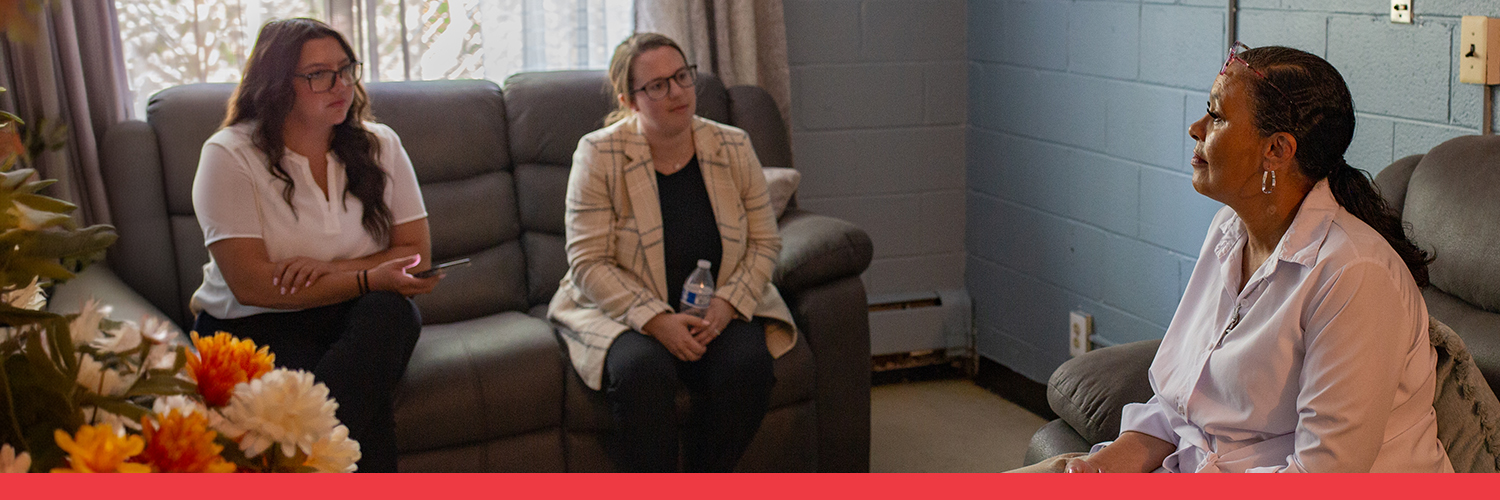
Some of my most meaningful work as a consultant happens while sitting across from a guest, simply listening. I’m often hearing about moments that are painful, personal, and still very close. These conversations don’t just shape the stories we tell; they shape the recommendations I make.
When our team discusses audiences, messaging, or creative direction, I’m no longer thinking about anonymous donor segments. I’m thinking about the people I’ve met and the responsibility we have to represent them honestly.
What If?
One conversation in particular has stayed with me for years because it completely changed the way I think about gathering a story.
I interviewed a mother who had fled an abusive marriage with her five children. As we talked, all five kids quietly sat and colored beside us while she spoke softly, sharing how she found the courage to leave in the middle of the night. She crossed state lines to find safety and a chance at a different life for her children.
As we wrapped up, we revisited where her story might be shared—in a fundraising letter, online, or through digital advertising. Although we had talked about that before the interview, it was in that moment that she paused. She hadn’t fully considered that someone outside her local community could see her story.
And that’s when it hit me. If we share too much, the very story meant to inspire generosity could put her safety at risk.
In that moment, the decision was simple: No story was more important than this mother’s safety. She had trusted me with one of the hardest chapters of her life, and that trust required more than good writing. It required discernment.
It reminds me that being a good consultant isn’t just about developing effective fundraising strategies . . . it’s also about understanding the people those strategies are meant to serve.
“Numbers” with New Meaning
Since then, I’ve had the privilege of hearing countless other stories.
I still think about the mother who layered her children’s pajamas to keep them warm while they slept in their car during the cold winter.
I think about the woman I interviewed before she graduated from a life recovery program, then again three years later as she prepared to buy her first home.
I don’t know many jobs where you get to witness this kind of transformation.
It’s not just the guests who leave an impression. Every time I’m on-site, I watch staff members greet people by name, celebrate milestones, pray with guests, and quietly serve behind the scenes.
It’s these small moments that help me understand the heart of each ministry and give context to every recommendation we make.
Data, testing, and thoughtful planning all matter because they help our clients reach more people and raise more revenue. But once you’ve sat across from someone and heard their story, those numbers take on new meaning.
When we take the time to understand a ministry from the inside out, it changes the partnership, too. One of our long-time ministry partners recently shared words I’ll never forget:
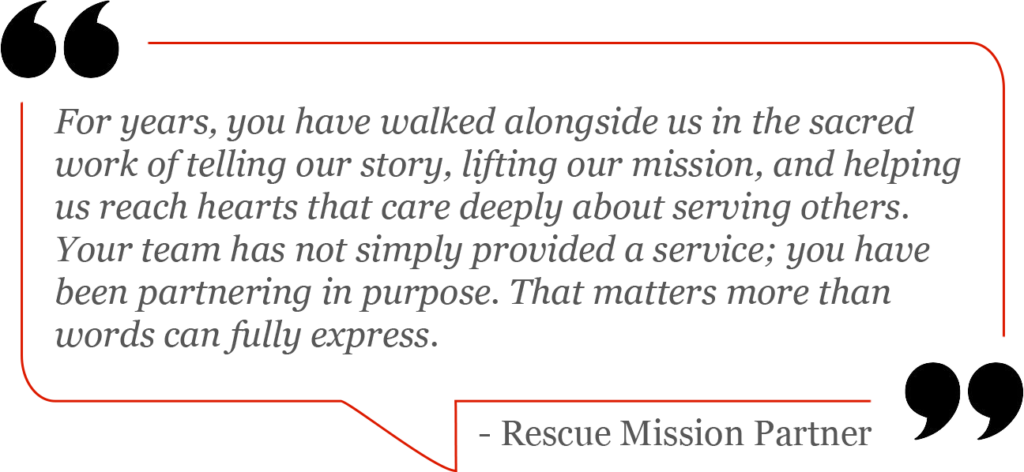
These words capture exactly what I hope every client experiences. That understanding only comes from being present.
Partners with Purpose
I carry a notebook, a recorder, and a list of questions with me to each rescue mission visit. I always come home with much more than that: faces I won’t forget, stories I’ll carry with me, and a renewed understanding that every campaign represents real people. Even weeks later, while discussing strategy or reviewing creative, I find myself thinking about those conversations.
This is why being on-site and present with our clients really matters.
They remind us that the work does not begin with a campaign plan or a data file. It begins with people—the guests whose stories deserve care, the staff who serve them every day, and the donors who want to be part of what is right with the world.
Related articles
-

We Measure Excellence Differently
A bed filled for the night. A hot meal, served to someone who hadn’t eaten in a while. A surgery…
-

The Most Important Month in Fundraising
For many nonprofits, acquiring a new donor is one of their biggest investments. Organizations spend months developing campaigns, refining messaging,…
-

Nonprofits: Are You Only Fulfilling Half of Your Mission?
I receive a lot of emails and phone calls from nonprofit organizations and ministries inquiring about our fundraising services. Unfortunately,…