

From Decline to Growth: What Turnaround Campaigns Have in Common
Keith Cleghorn
Executive Vice President of Client Services
Every nonprofit leader hopes to see their organization grow. More donors. More impact. More opportunities to serve.
Yet many eventually find themselves leading through a season of rebuilding. Sometimes it’s the result of changing donor behavior. Sometimes it follows a leadership transition or years of organizational instability. Whatever the cause, there comes a moment when leaders have to answer a difficult question: Are we simply trying to recover what we’ve lost, or are we building something stronger for the future?

I’ve had the opportunity to walk alongside ministries through many different seasons over the years. Every organization has its own story, but one observation continues to surface.
Fundraising turnarounds rarely happen because someone had one brilliant idea.
More often, they happen because a leadership team is willing to take an honest look at where they are, clarify where they’re going, and keep doing the right things long enough for the donor file to respond.
Looking Beyond the Symptoms
When fundraising results begin to decline, it’s natural to search for the most obvious explanation. Perhaps the latest appeal didn’t connect with donors. Maybe it’s time for a new creative approach or a different campaign strategy.
Creative certainly matters. Every organization should communicate clearly and tell compelling stories.
Still, I’ve found that the most significant fundraising challenges rarely begin with a single campaign. More often, acquisition gradually slows, fewer efforts are made to reactivate lapsed donors, testing becomes less frequent, and communications slowly drift toward talking about organizational needs instead of the difference donors are making.
None of these changes seem especially significant on their own. Over several years, however, they can fundamentally reshape the health of an organization’s fundraising program.
The encouraging news is that the same principle works in reverse. Small improvements, made consistently over time, often produce results that seem extraordinary when viewed in hindsight.
A Vision That Required More Than a New Building
Not long ago, I came across a photo that reminded me of this.
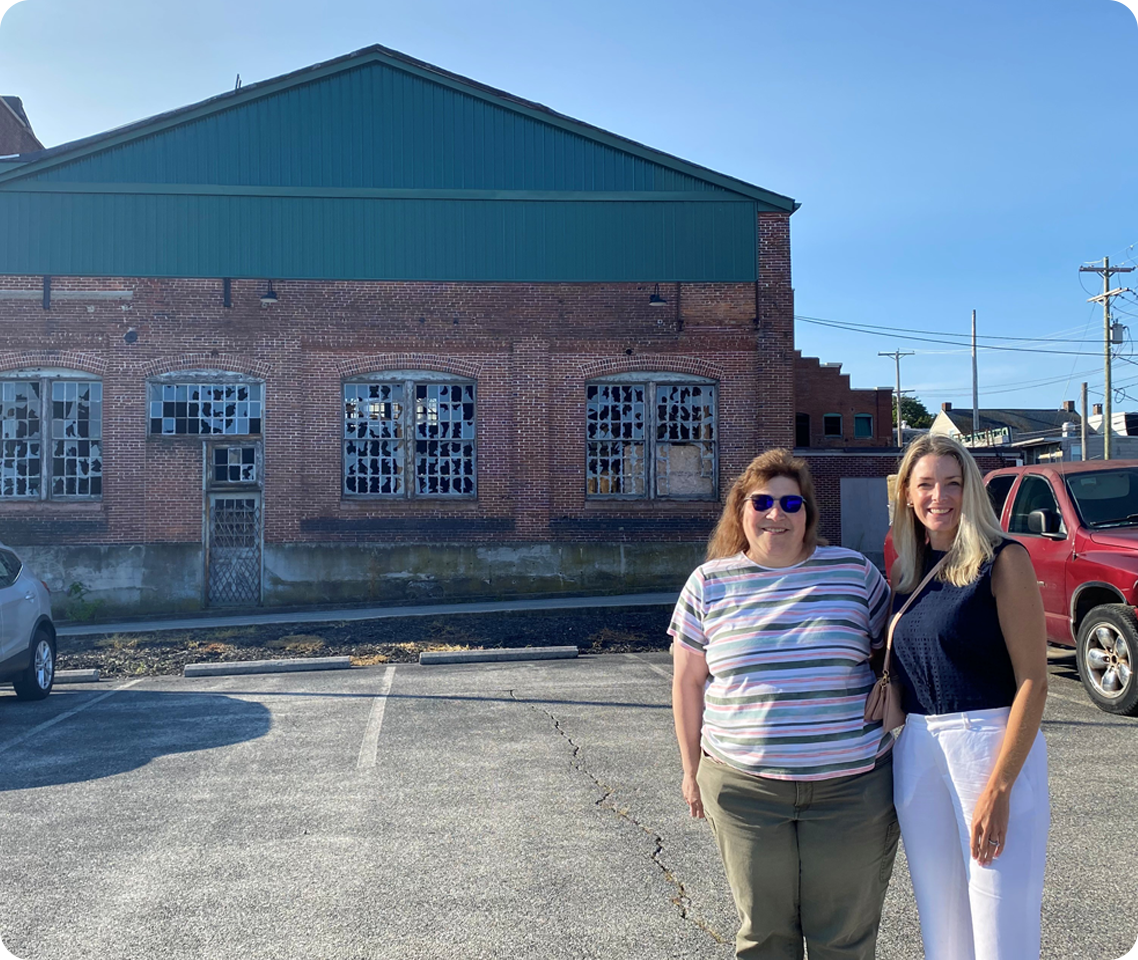
It was taken several years ago in front of an old industrial building in York, Pennsylvania. Susan Workinger, a longtime member of the LifePath Christian Ministries leadership team, is standing alongside Liz Hall, a consultant with Douglas Shaw & Associates, in front of what was then an aging, vacant industrial facility.
At the time, it required a great deal of imagination to picture what the building could become.
In many ways, that photo represents more than a building.
By then, LifePath had already come through one of the most difficult chapters in its history. Following decades of stability, the organization experienced a prolonged period of instability. It adopted a new name, its donor base declined significantly, and much of the work ahead involved rebuilding trust, rebuilding relationships, and creating confidence in the ministry’s future.
None of those past decisions were made by the leadership team now guiding the organization. Their responsibility was something different.
They had to decide what LifePath could become from this point forward.
The vision they embraced extended far beyond renovating an old industrial property. They imagined a campus where people experiencing homelessness could find emergency shelter, housing support, case management, vocational services, counseling, and other resources in one place.
It was a bold vision. But before it could become a successful capital campaign, it required something even more important: a healthy fundraising program capable of sustaining it.
Over the past several years, the LifePath team has steadily strengthened that foundation. They rebuilt relationships with donors, expanded the donor file, improved communications, refined strategy, and continued learning through thoughtful testing and careful evaluation.
The goal was never simply to recover what had been lost. It was to build the kind of fundraising program that could support the ministry’s next chapter.
Most of the work involved in this wasn’t particularly visible. There were planning meetings, campaign reviews, difficult conversations, and countless small decisions that, by themselves, probably didn’t seem all that remarkable. Looking back now, though, it’s easier to see what those years were accomplishing.
They were building the foundation that would eventually support something much larger. Today, LifePath has secured the property, completed site preparation, received millions of dollars in leadership commitments, and launched the public phase of its capital campaign. If all goes according to plan, construction will likely begin in early 2027.
The groundbreaking will understandably receive a great deal of attention. The years that made it possible probably won’t.
Patterns That Repeat
While every organization’s story is different, we’ve seen this pattern many times. We’ve seen it in rescue missions, international ministries, faith-based ministries, and nonprofits serving communities around the world.
The organizations that regain momentum usually aren’t searching for a single breakthrough. More often, they’re the ones willing to strengthen the fundamentals.
One ministry we serve spent years experimenting with different acquisition strategies. Some approaches generated impressive numbers of first-time donors, yet many of those donors didn’t remain engaged over time.
Rather than celebrating short-term results, we focused on helping the leadership team ask a better question: Are we building the kind of donor community that will sustain this ministry for years to come?
This question ultimately proved more valuable than any individual campaign.
What Most People Never See
Turnaround stories often look ordinary as they’re unfolding. People naturally notice the campaign launch, the new building, or the annual report showing renewed growth.
What they don’t see are the years of careful planning, honest evaluation, and steady execution that laid the groundwork for those milestones

Most meaningful growth begins long before anyone recognizes it.
Walking the Long Road Together
At Douglas Shaw & Associates, we’ve never believed our role is simply to help organizations raise more money.
Our responsibility is to help leaders understand where they are, make wise decisions, and build fundraising programs that remain healthy for the long term.
Sometimes this means celebrating encouraging results. Other times it means asking difficult questions, challenging assumptions, or encouraging patience when progress feels slower than everyone would like.
When I look back at that LifePath photo today, I don’t really see an old industrial building. I see Susan and Liz standing together at the beginning of a journey that neither of them could fully imagine at the time. The cleared site, the completed plans, and the excitement surrounding a new campus all came later.
What mattered most in that moment was a leadership team willing to imagine a different future—and then patiently build the fundraising foundation that future would require.
Want to know exactly where your organization’s potential lies—and how to meet or exceed your dreams and goals for your fundraising future? Let us know. We’ll help get you where you need to go.
We’ll be the trusted, strategic partner you need that’s ready for the long haul.
Related articles
-

We Measure Excellence Differently
A bed filled for the night. A hot meal, served to someone who hadn’t eaten in a while. A surgery…
-

The Most Important Month in Fundraising
For many nonprofits, acquiring a new donor is one of their biggest investments. Organizations spend months developing campaigns, refining messaging,…
-

Nonprofits: Are You Only Fulfilling Half of Your Mission?
I receive a lot of emails and phone calls from nonprofit organizations and ministries inquiring about our fundraising services. Unfortunately,…