

AI Summaries Are Changing Search. What Should Nonprofits Do Next?
Amy Sewell
Executive Vice President of Creative Services
Digital channels are notorious for changing quickly—and right now there’s a huge change hitting Google advertising. In more searches, users are now seeing AI-powered summaries before they reach traditional search results, and, in some cases, before they engage with paid ads.
For nonprofit organizations that rely on paid search to reach donors, potential donors, volunteers, and people they serve, that shift naturally raises questions. If someone gets an answer faster, will they still click on an ad? Will paid search campaigns continue to work? Should nonprofits change their digital strategy?
The full impact of AI in search is still taking shape, and no one knows exactly where it will lead. But search is not going away. What has to change is how those campaigns are built so they can keep performing in an AI-driven search environment.
What’s Actually Changing?
For nonprofit advertisers, this matters most when someone is searching for an urgent or mission-connected need: “help homeless families,” “donate to disaster relief,” “food pantry near me,” or “how to help people in crisis.”
AI summaries, also called AI Overviews in Google’s search experience, are designed to answer a user’s question directly at the top of the page. Instead of immediately scrolling through links or ads, a user may first read a short AI-generated response.
The opportunity is still there. But campaigns need to be flexible enough to show up as search behavior, placements, and ad formats continue to evolve.
Why We’re Not Pulling Back from Search
While AI summaries are changing the search experience, they are not changing one fundamental reality: search remains a highly effective platform for reaching your donors and potential donors
The key now is to make sure campaigns are flexible enough for how people search today. People are using longer questions, conversational phrases, and voice-to-text searches more often. They are not always typing the exact words an advertiser might expect.
That is why the future of search advertising will rely less on controlling every phrase and more on giving the platform strong signals, clear creative direction, and enough flexibility to match the right message with the right search.
Three Strategies That Matter Now
1. Use Broad Match Keyword Targeting
Broad match keyword targeting allows Google to match ads to the intent behind a search, rather than requiring the exact same wording.
For example, if a campaign includes a keyword like “feed the homeless,” the ad may still be eligible for someone searching “helping homeless people” or “meals for people in need.” The words are different, but the intent is closely related.
This flexibility has always been valuable, but it is even more important now. With voice-to-text and conversational search changing the way people ask questions, exact phrase targeting alone can miss meaningful opportunities. Broad match helps campaigns stay connected to the topics and needs that matter most.
2. Consider AI Max
AI Max is a Google Ads tool that can adjust headlines and descriptions in real time based on what someone searches and what Google understands from the organization’s website and campaign assets.
For many nonprofits, this requires a level of comfort with less control over exact wording. The concern for control is valid. Brand voice, mission language, and donor-facing messaging all matter. But AI Max can also help campaigns become more relevant to each search by allowing the platform to optimize creative combinations as ads run.
We have seen this approach work well in campaigns where clients have been comfortable giving the platform more flexibility. The lesson is not that every organization should give up creative oversight. The lesson is that approved creative can serve as the starting point, while the platform is allowed to optimize toward stronger performance.
As AI becomes more integrated into search, tools like AI Max are likely to become increasingly important.
3. Add Performance Max Campaigns
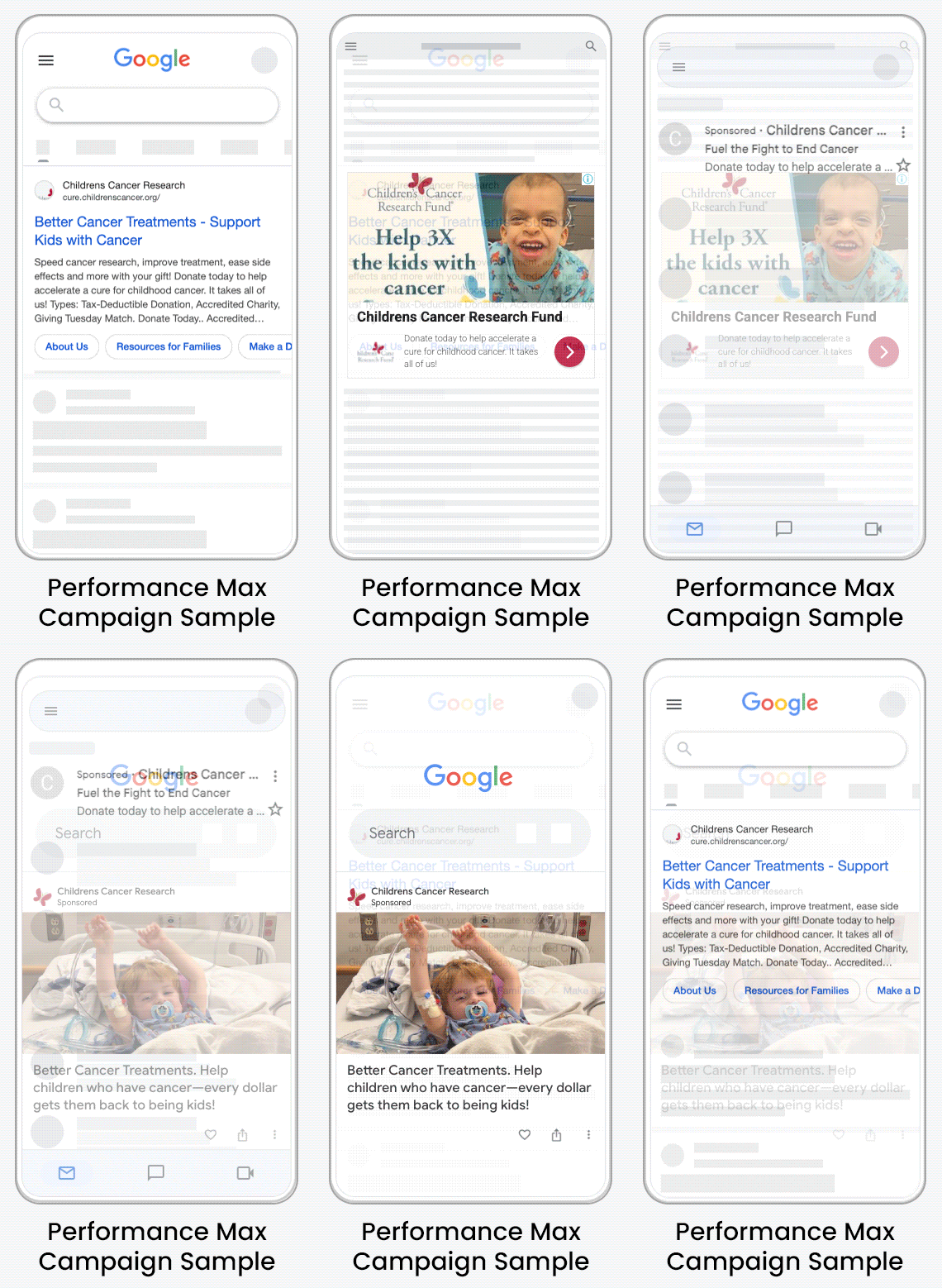
Traditional search ads rely mostly on headlines and descriptions that appear within search results. Performance Max campaigns use those same types of messages, but they can also include images and appear across multiple Google properties.
That broader reach matters. Not every donor journey starts with a direct search and immediate click. Sometimes people need to see a message first, build familiarity, and then respond later when they search again or encounter another ad.
Performance Max campaigns can help build awareness, create impressions, and support traditional search performance. They can also help nonprofits stay visible across more of Google’s ecosystem as search behavior continues to evolve.
What About Ads Inside AI Overviews?
Google is already developing and expanding ad opportunities within AI-powered search experiences. This is an encouraging sign for advertisers, as it means paid placements are not being left behind as search evolves.
The reality is that this is a moving and rapidly changing area. Douglas Shaw & Associates is closely monitoring these developments so we can help clients take advantage of new opportunities as they become available. As always in digital, it’s important to maintain a posture of using what works today while paying attention to changes and testing new options as they occur.
What Nonprofits Should Take Away
The rise of AI summaries should not lead to fear, but it should lead to preparation.
Nonprofits should continue investing in search when it is performing. They should also be open to campaign structures that give the platform more flexibility to match user intent, optimize creative, and reach people across more placements.
The best path forward is not to abandon what works. It is to adapt what works for the emerging search environment.
AI may be changing the search landscape, but the goal remains the same: connecting the right message with the right person at the right moment. Nonprofits that stay flexible and continue testing will be best positioned for what comes next.
If you would like to see what this could look like at your organization, please reach out today. Let us help you be an even bigger part of what is right with the world.
Related articles
-

In 32 Years, Absolutely Nothing’s Changed in Fundraising
Most days, when I sit down with my morning cup of coffee, our little dog Bailey at my side, I…
-

Hiding in Plain Sight
What if meaningful fundraising growth didn’t require a major new campaign, a complete website overhaul, or a dramatic change in…
-

From Decline to Growth: What Turnaround Campaigns Have in Common
Every nonprofit leader eventually faces decisions that do not come with easy answers. In these moments, the value of a…